Creation Care Tips
Creation Care Team of BUMC Creates Butterfly Garden
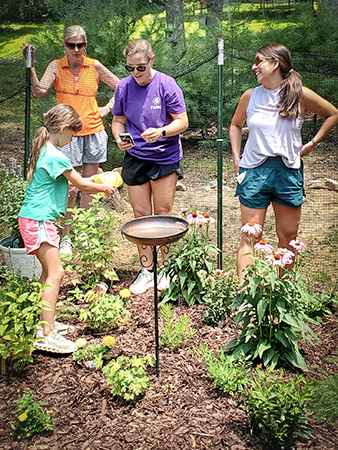
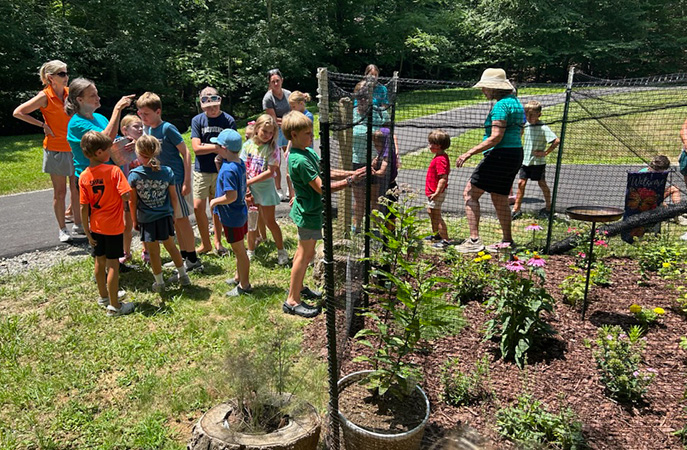
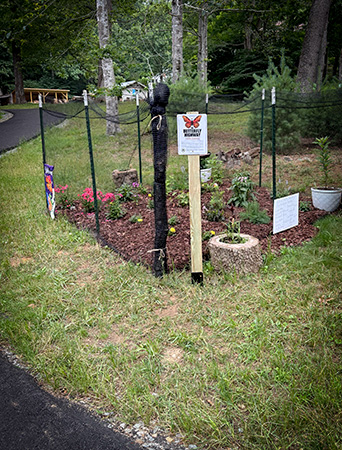
This summer, volunteers from the Creation Care Team of Boone UMC created a “Pollinator Pitstop” garden in the Meadow behind the church. We followed the guidelines of the North Carolina Wildlife Federation and pledged to provide an insecticide-free habitat that prioritizes native plants vital to the health of pollinators such as butterflies, bees, and hummingbirds.
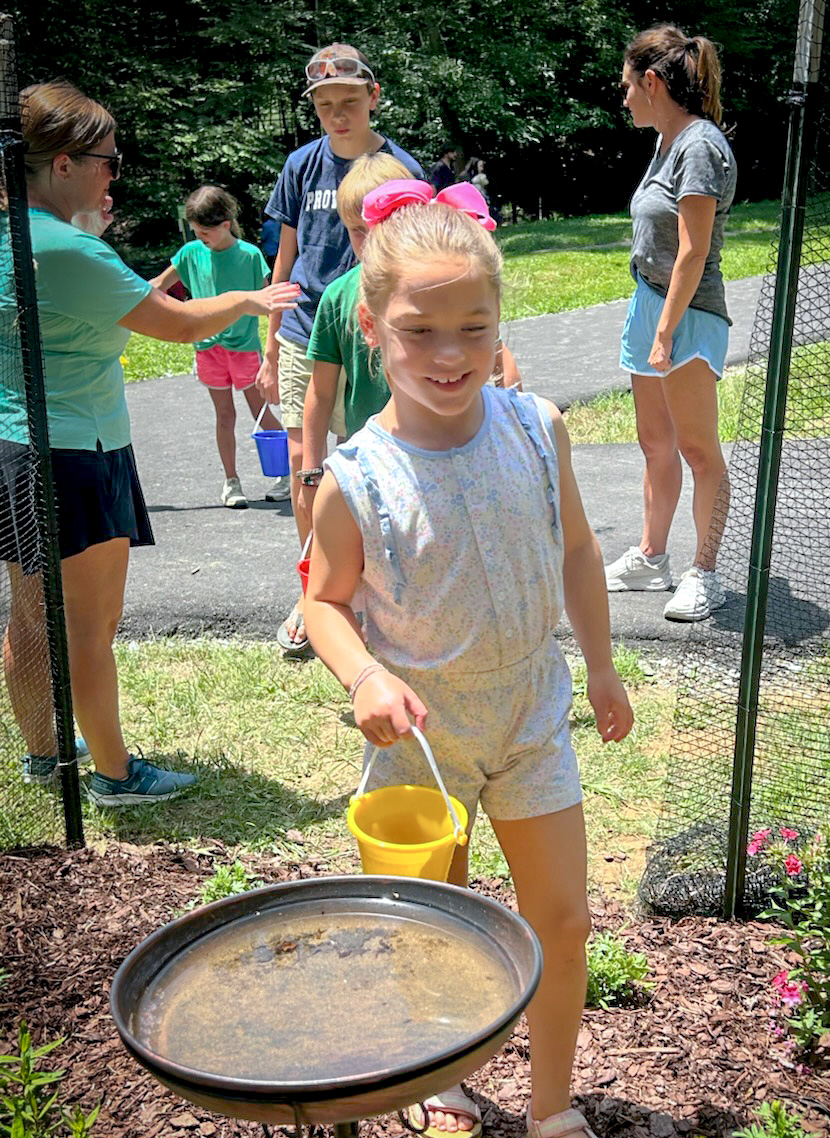
Members of the Creation Care team prepared the garden space in early June, and children attending Vacation Bible School helped with planting flowers on June 16. Creation Care team volunteers helped keep the new garden watered by scooping water from the nearby creek. In mid-July, Boone UMC hosted an intergenerational mission team from FUMC Dothan (Dothan, Ala.). The young children from this team, assisted by their adult helpers, watered the Butterfly Garden on July 16 by carrying water from the creek. The children also enjoyed splashing in the creek after their work was done.
Why a Butterfly Garden?
A recent study found that the total abundance of butterflies in the U.S. has declined 22 percent between 2000 and 2020. Habitat loss from development, urbanization, intensive agriculture, invasive species, and other manmade threats like climate change are likely to blame.
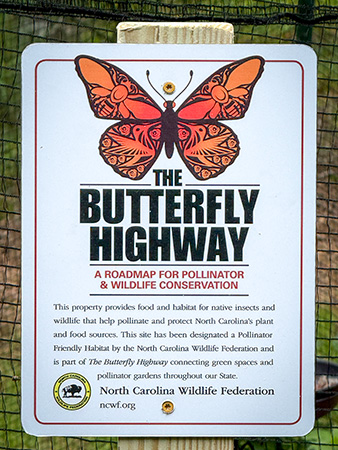
The Butterfly Highway is a statewide conservation restoration initiative that aims to restore native pollinator habitats to areas impacted by urbanization, land use change, and agriculture across North Carolina. From backyard Pollinator Pitstops to large-scale roadside habitat restoration, the project is creating a network of native flowering plants to support butterflies, bees, birds, and other pollen- and nectar-dependent wildlife.
Take a walk on the newly-paved Trail in the Meadow behind the church building and pause to enjoy the new butterfly garden!
For more information:
North Carolina Wildlife Federation: The Butterfly Highway
Study Finds That US Butterfly Populations Are Severely Declining
Reducing Our Footprint:
How Boone UMC is Taking Action on Single-Use Waste
Did you know that 25 billion styrofoam cups are used in the United States each year? And single-use plastics are designed to be used once, but when they are discarded, they linger for centuries. This waste is clogging up our rivers. MountainTrue estimates that more than 70% of the trash collected in the Winkler Creek trash trout is styrofoam. Which is why Boone UMC is making a conscious effort to reduce our single-use plastic footprint.
The Creation Care team, a new committee that formed last summer, has been tasked to review the church’s habits and suggest more sustainable alternatives. Our team is proud to see real plates and silverware reused each week for the Together We Eat Thursday dinners. We have also adjusted our to-go containers supply so that they are both recyclable (when washed) and compostable. This goes for the coffee cups during Sunday services too. We do encourage you to bring your own thermoses, but please be mindful of how much coffee you are taking and leave some for others.
More efforts are underway to reduce Boone UMC’s plastic waste. If these issues are of interest to you, please consider joining the Creation Care team. Contact chairperson Peggy Graham for more details. To learn more about reducing single-use plastics in Western North Carolina, visit Plastic Free WNC.
Reduce, Reuse, Recycle:
Simple Steps to Tackle Plastic Pollution
Your BUMC Creation Care team is offering some ideas of simple things you can do to help clean up and protect the beautiful home God has given us. We’re starting with encouraging you to reduce your use of single-use plastics. Since Hurricane Helene, have you noticed plastic trash in our creeks and streams, even up in the trees?
The billions upon billions of items of plastic waste choking our oceans, lakes, and rivers and piling up on land is more than unsightly and harmful to plants and wildlife. Single-use plastics are small but have a large impact. 9.1 BILLION US Tons of plastic has been produced since plastic was introduced in the 1950s. Most (79% )of plastic ever made still sits in landfills or the natural environment. The amount of plastic that gets recycled is disturbingly small.
Much of our plastic trash ends up in the ocean. There is an estimated 75 to 199 million tons of plastic waste currently in our oceans, with a further 33 billion pounds of plastic entering the marine environment every year. This constant flow of plastic production is simply too much for existing waste management and recycling infrastructure. Plastic pollution permeates every inch of the ocean – from microplastics in the food chain to plastic water bottles floating on the surface. One of the most famous examples, however, is the Great Pacific Garbage Patch. This monolith of ocean pollution is made up of all kinds of marine debris and contains 1.8 trillion pieces of plastic, covering an area twice the size of Texas.
What can you do? Reducing the amount of plastic you use, such as plastic shopping bags, plastic water bottles, styrofoam cups and zip-lock bags.
To learn more about the threat and impact of plastic pollution and get tips to reduce your plastic consumption, click here.
Sources:
https://www.earthday.org/earth-day-2025
https://www.rts.com/blog/plastic-pollution-in-the-ocean-facts-and-statistics
Your BUMC Creation Care Team Says Thrift Shopping is Cool! (and Good for the Environment)
Since you can’t recycle your used clothing, repurpose it. Repair things when you can, sell “higher-end” clothing at consignment shops, and donate clean, gently used clothing to local thrift stores or the BUMC Bazaar. If you are shopping for something new to wear during the holidays, consider shopping at a local or online thrift or consignment store. “Thrift shopping, a practice that has gained significant traction in recent years, is more than just a trend – it’s a powerful statement in support of environmental sustainability.” How Thrift Shopping Helps the Environment
Crystal Osner, BUMC Creation Care Team member and Impact Acceleration Coordinator for the Textile Exchange provided this information about why we can’t actually “recycle” our used clothing:
“Textile recycling is almost nonexistent. Last year, less than 1% of textiles were made from recycling other textiles. If a garment or bag is labeled as recycled, it is most likely made from recycled PET (polyethylene) bottles. Using recycled PET in garment production is misleading (greenwashing) because garments are rarely recycled, hence ending the circle of recyclability for PET. Whereas, if PET was recycled back into a bottle, then it could be recycled over and over again creating a circular economy.
So why aren’t garments recycled? To enhance the performance of textiles, many fiber types are usually blended together such as cotton, elastane, and polyester. The challenge is trying to separate these different fibers because they all have different chemical properties. Innovation in this space is slowly emerging, but it will take some time before textile to textile recycling is common. Until there is technology to recycle textiles, try repairing your garments or repurposing them into art or cleaning rags.” Click for more.
Photo Captions
• Alecia Glaize loves the cozy sweater she bought at the BUMC Fall Bazaar.
• Karen Hodges loves the stylish boots she bought at the BUMC Fall Bazaar.
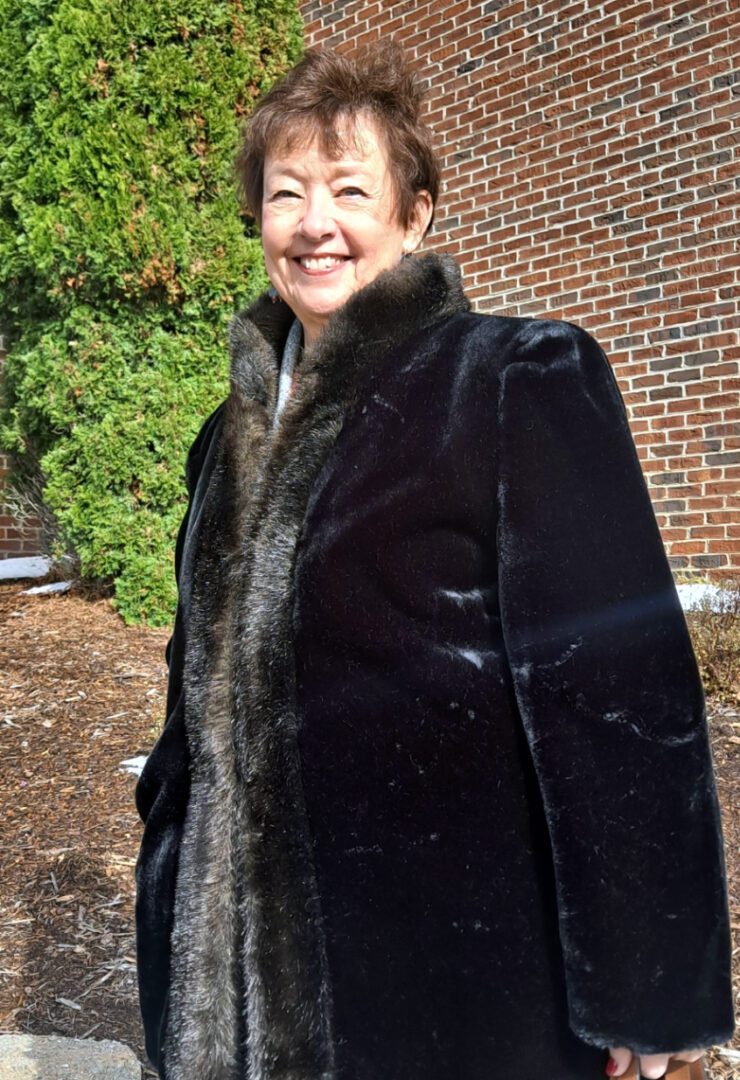
• Joanna Fonville is modeling her glamourous winter coat that she bought a few years ago at the BUMC Fall Bazaar.
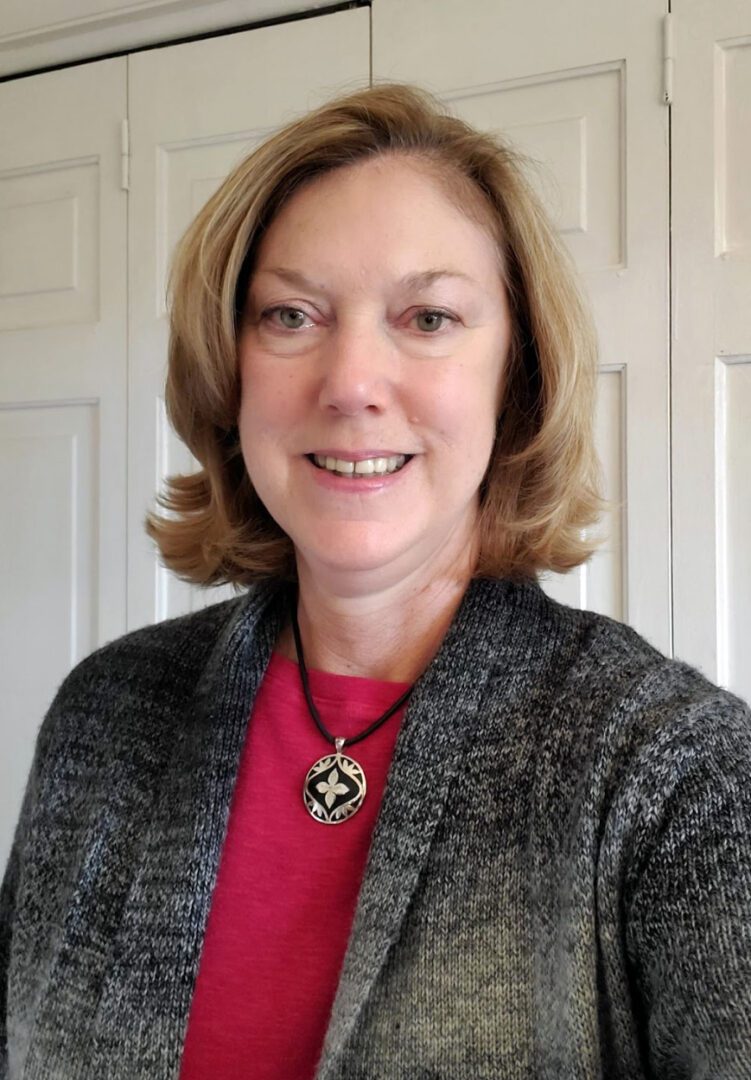
Smiling woman in red shirt and sweater.
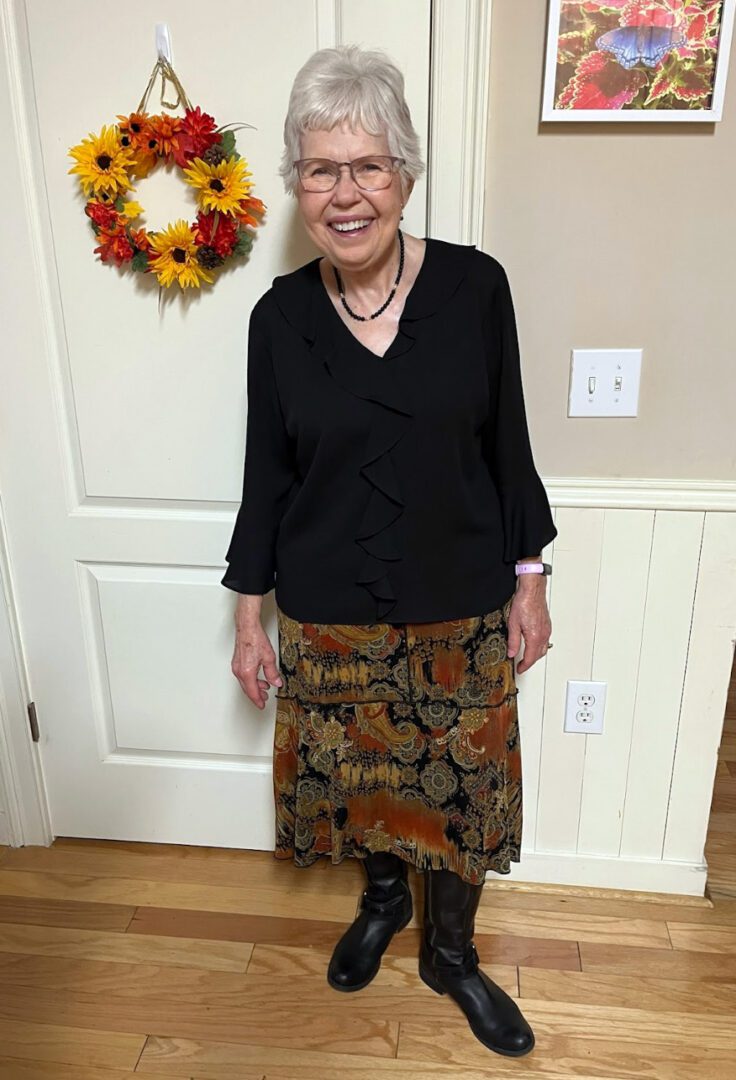
Elderly woman smiling, standing near floral wreath.